Anatomy of an Energy card
Energy is the fuel. No Energy attached, no attack — it really is that simple. What isn't simple is how slowly you're allowed to add it, and that single restriction shapes every deck ever built.
The rule that matters most
That's the throttle on the entire game. A Pokémon needing three Energy is a Pokémon you're spending three turns on, and three turns is a long time when your opponent is attacking every one of them.
It's also why Energy acceleration — any card that gets Energy into play without using your one attachment — is so prized. Abilities that attach from the deck, attacks that attach on the way through, Trainers that pull Energy out of the discard: all of them are buying turns.
Basic Energy
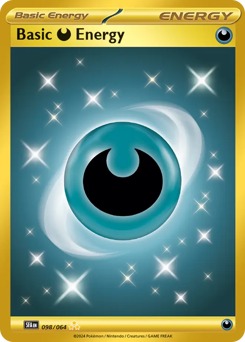
Basic Energy has no text. It provides one Energy of its type and nothing else. There's one for each of the nine types — Fire, Water, Grass, Lightning, Psychic, Fighting, Darkness, Metal and Dragon.
Special Energy
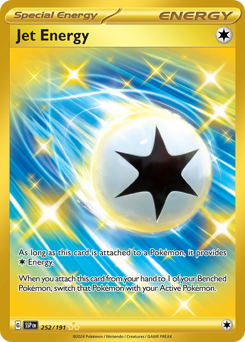
Special Energy has a name and does something extra. Jet Energy provides one Colorless Energy, and when you attach it to a Benched Pokémon it immediately switches that Pokémon into the Active Spot — a free retreat, folded into an attachment you were making anyway.
The catch: Special Energy counts toward the 4-copy limit like any other card, and it's a real card slot. Every Special Energy you run is a Basic Energy you don't.
Colorless costs
Look at an attack cost and you'll see two kinds of symbol. A typed symbol (Lightning, Water, and so on) must be paid with that type. A Colorless symbol — the plain star — can be paid with any Energy at all.
So an attack costing Lightning + Colorless needs one Lightning Energy and one of anything. That's why decks can splash a single off-type attacker without rebuilding their whole Energy line.
Quick check
Your Active Pokémon needs two Energy to attack and has none. It's your turn. What's the earliest you can attack with it?
How much Energy should a deck run?
A rough starting point: 8–14 Energy cards in a 60-card deck. Decks built around expensive attacks run more; decks that only need one or two Energy in play run less.
It's a genuinely easy number to get wrong, in both directions — too few and your attacker sits there doing nothing, too many and you draw Energy when you needed Pokémon. Dexter flags it on every deck profile when the count looks off for the attackers you're running.