Anatomy of a Trainer card
If Pokémon do the fighting, Trainer cards do everything else — finding the card you need, moving Pokémon around, recovering Energy, disrupting your opponent.
Most of a deck is Trainer cards. There are five kinds, and each has a different limit. Knowing which is which is the difference between an ordinary turn and a great one.
Supporter — one per turn
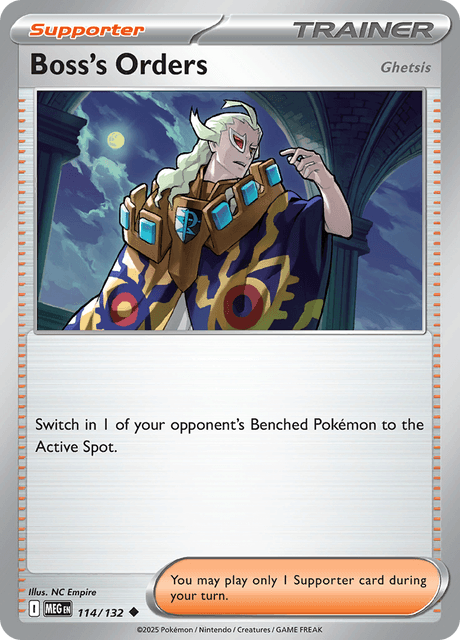
Supporters are the big ones. They draw cards, search your deck, or force your opponent to do something they don't want to.
Boss's Orders drags one of your opponent's Benched Pokémon into the Active Spot. That's often the whole game: they've been carefully building something on the Bench, and you pull out the one that can't defend itself.
Item — as many as you like
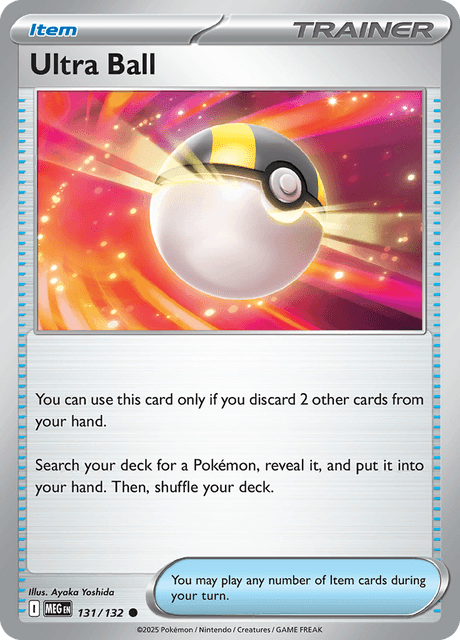
Items are smaller, and you can play as many as your hand allows. Ultra Ball discards 2 cards to search your deck for any Pokémon — playing three of them in one turn is completely legal, and sometimes exactly right.
Pokémon Tool — attached, one per Pokémon
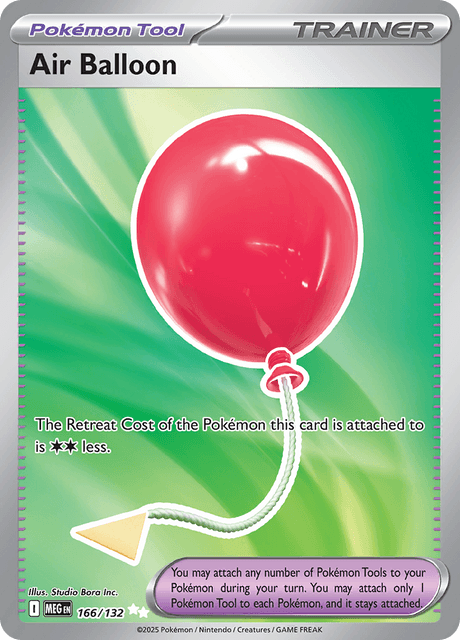
Tools attach to one of your Pokémon and stay there. Air Balloon makes retreating two Energy cheaper, which quietly solves the "my attacker is stuck out front" problem.
Each Pokémon holds one Tool at a time, and the Tool goes to the discard pile with it when it's Knocked Out.
Stadium — one in play, shared
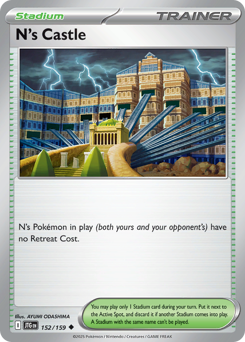
Stadiums sit between the two players and affect both sides. Only one can be in play at a time: play a new one and the old one is discarded, whoever it belonged to.
That makes a Stadium two cards in one. It does its own job, and it removes whatever your opponent had down.
ACE SPEC — one per deck, total
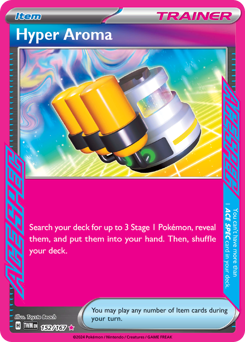
ACE SPEC cards are the strongest Trainers printed, and the most restricted. Hyper Aroma searches out three Stage 1 Pokémon and puts them straight into your hand.
Quick check
You've already played a Supporter this turn. Which of these can you still play?
Spotting them on a deck list
Trainer cards are sometimes listed all together, sometimes split into Supporter / Item / Tool / Stadium sub-counts. ACE SPEC cards count as whatever they are — Hyper Aroma is an Item, Neo Upper Energy is an Energy.
Dexter shows the sub-counts on every deck profile, because the balance between them tells you how a deck wants to play before you've read a single card name.